
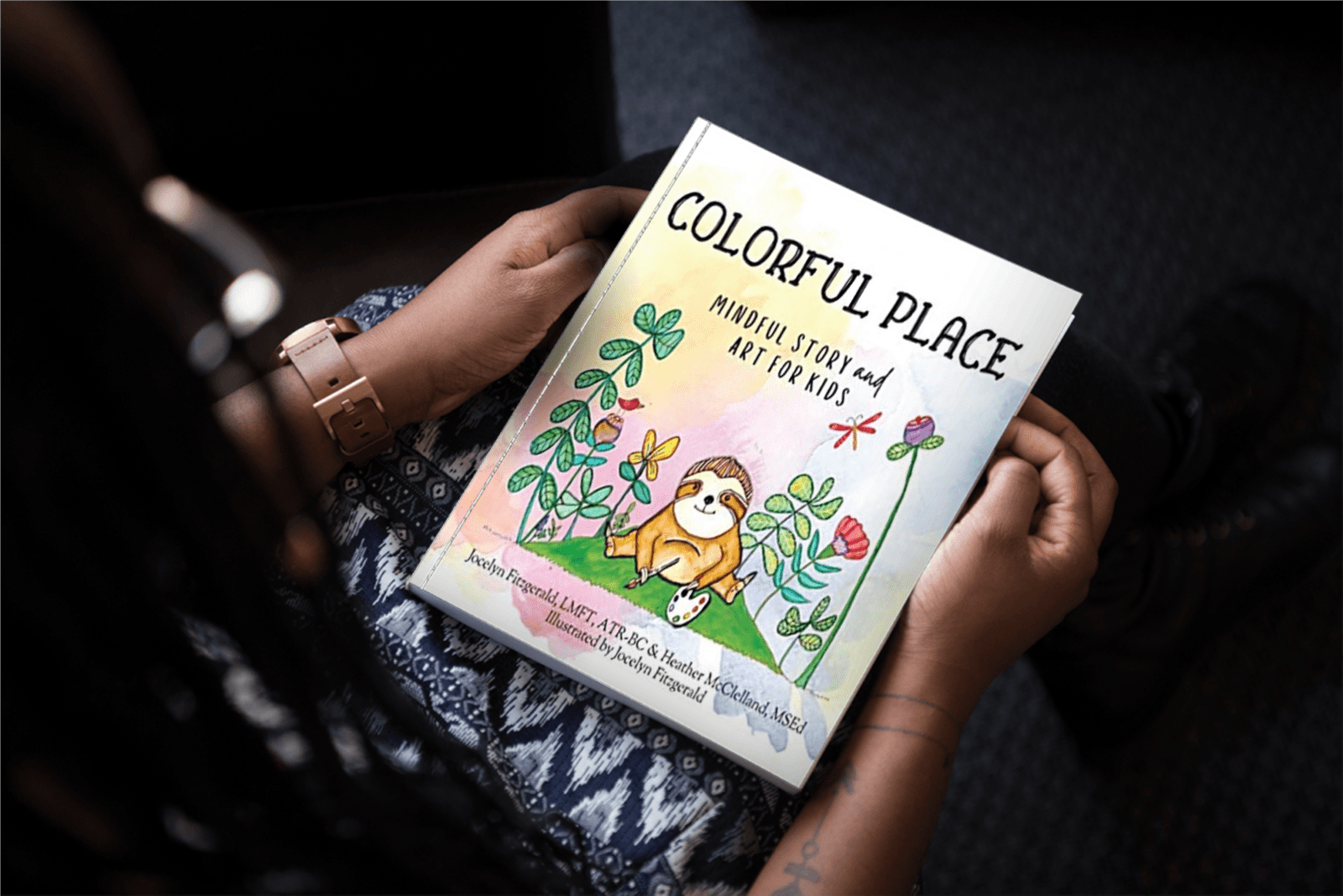
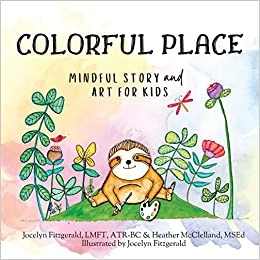
Recently, we were treated to a wonderful new book that guides young children into mindfulness through creativity – Colorful Place by art therapist Jocelyn Fitzgerald and behavioral intervention teacher Heather McClelland. Loaded with bright and captivating artwork, the book combines a sensory-focused guided relaxation with simple art projects that put mindfulness into practice.
We wanted to find out more about how the book came about, so we did an informal Q&A via email with Heather, who is also trained in Yoga Calm, incorporating it into her work with K-3 students in the Vancouver (WA) Public Schools, where she also runs her school’s Playworks program doing structured recess games to support conflict resolution.
Were there specific experiences in your teaching that especially motivated you and Jocelyn to create Colorful Place? Or was it more the general sense that, in light of the pandemic, kids and parents could use extra resources and support to meet the challenges of the time?
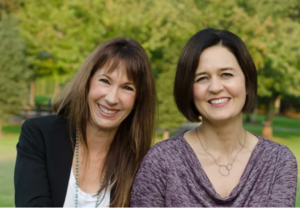 Jocelyn and I are mom friends who met about five years ago when our boys were in kindergarten. About a year before the pandemic, while our boys were playing basketball, we started talking more seriously about bringing together mindfulness and art. We would chat about it at games and practices. Both of us use mindfulness techniques, and I loved learning how she was using art with her clients to help them heal from trauma or process big feelings. I’d share with her how social/emotional services work in the school setting, and she thought it was great that the schools had such support programs for behavior.
The more we talked, the more we began to notice how art and mindfulness have similar qualities. Both bring us to the present moment, relax the body, help us notice emotions in order to be more in tune with ourselves, and to focus on process, not product. Why not bring them together?
We were both deeply concerned at the number of children who had emotional needs and the lack of resources to meet that need. Jocelyn thought therapists would love another resource for helping clients, and I thought schools would love more resources to help students self-regulate. It was a unique idea we hadn’t seen before, so when the pandemic hit, we decided to turn our idea into a book for children. Our hope was that the therapeutic qualities of art and mindfulness together could help the world recover.
On a personal level, work on our book became a soothing process for both of us, I think, channeling our own anxiety towards something constructive. The world was falling apart, and we were working on a balm to ease the pain. It turned the pandemic into a truly enriching time for both of us. We completed the whole project via Zoom, phone, and email. We met once in person – masked, of course – to lay out the pages and match the artwork before we sent it off to the publisher.
What are some of the ways you envision parents using the book?
 The best way is to start small. The littlest ones might just want to look at the pictures at first. The text can be summarized and made shorter for small children. It’s really important that parents let the child lead the book experience, though. If they’re losing attention, it’s time to stop. Each time the book is “practiced,” the child’s attention and stamina for finding calm should grow.
We also hope parents become more attuned to their own hearts and minds, and likewise grow into mindfulness. After all, the best way to teach a child is to learn something yourself and be a role model.
While your book is geared toward children, it definitely seems like you’re also training adults in how to do mindfulness with them – from the explicit guidance you offer in the introduction to the guided relaxation serving as a template for creating relaxations of their own. Was this intentional?
Ha! You’re onto us! Yes! We ARE most certainly trying to teach mindfulness to both. A therapist friend of ours calls it a “two-fer” – you get two learning mindfulness for the price of one!
 We’re fully aware that there are tons of apps out there that you can put in front of an earbudded child so they can do “meditation,” but tech isn’t necessary here. In fact, as an endorsed reading teacher, I can say that reading has so many benefits that tech just can’t deliver – calming the nervous system, the bonding that comes from closeness and touch, the obvious literacy benefit.
Any other tips you might offer – especially to teachers, counselors, and other helping professionals who want the kids they work with to get the most out of Colorful Place?
- Become curious about mindfulness itself. If you’re a skeptic, you probably won’t benefit, and if you think mindfulness is a magic bullet to cure all classroom management issues, you’ll be disappointed. Engage in the process of exploring mindfulness itself.
- Think of mindfulness more like learning a language of self-regulation. As with any language, it takes time, exposure, and practice.
- It can be helpful to review expectations for behavior before the experience begins.
- Start with just a brief segment of the book and add a page or two each time you use it, gradually building up to using the whole.
- Since teachers will most likely be reading the book to a whole class instead of just a child or two, make accommodations for space – just as you do with your Yoga Calm work!
- Similarly, adapt the art projects to fit both your space and your student needs.
- Try doing just the story portion of the book first, then add in the art once the students have become familiar with the guided relaxation. That way, there won’t be so much new stuff all at once.
Do you have a favorite “art recipe”? If so, which and why?
 My personal favorite is “Drag, Scrape, & Push.” I’m a pretty artsy person, but I’d never heard of this technique until Jocelyn introduced it to me. I actually tried it out in my garage. It was so fun! I felt like I was 10 years old and making a beautiful mess. The activity is such a good example of how the goal isn’t the end product but the process itself – and noticing what feelings are coming up as you do the art.
The whole time I was doing the project, I kept thinking, “This is so fun! Thrilling! Messy!” It was the essence of mindfulness – living in the present. I now have the painting up in my classroom at work.
Can we expect more books from you and Jocelyn in the future?
Yes! We actually have twenty different stories we wrote last spring. This book is just one of them.
We hope you’ll head over to Heather’s and Jocelyn’s website – breatheartcalm.com – and explore more of what they have to offer. While you’re there, you can also claim a FREE copy of their Creating Calm workbook for kids, full of art and mindfulness activities designed to help children bring awareness to the present moment, connect with their bodies, and use their five senses to create art.
You can also experience some of Colorful Place for yourself through practicing their guided relaxation on Insight Timer – also completely free.
Colorful Place is now available through both Powell’s and Amazon.

I would like the Creating Calm Workbook.
It sounds like a terrific resource for parents and teachers.
I mentor many parents.
Hi, Pennie! You can request it over on the authors’ website: https://www.breatheartcalm.com/.