
A guest post by Certified Yoga Calm Instructor Jeff Albin
 The detention officer bursts through the conference room door at exactly the same time the voice of CONTROL blares over the intercom: “MR ALBIN WHAT ARE YOU THROWING AT THE RESIDENTS?” The inflatable koosh ball rolls to a stop at the feet of one focused resident who remains diligently standing in Warrior Three. The detention officer stands in the doorway, one hand on her belt and the other on her radio all call button.
“I need to ask what you are doing, Mr. Albin. CONTROL said you were throwing something at the residents. That’s why I’m here.”
I try to look guilty because I think I’m supposed to look guilty, but really, I’m more surprised and annoyed at the interruption. The boys look guilty because they’re used to looking guilty even when they are not.
“What are you doing?” the officer asks.
I’m tempted to resort to the classic kid response: “Nuthin.” Instead, I just show her the koosh ball, and she laughs.
“CONTROL, it’s just a fancy beach ball. I think they’re okay.”
I stand in front of the camera and bounce the ball off my head several times just to reassure CONTROL. “See, it doesn’t hurt. It’s soft. I was throwing it at them to help them work on focus.”
Once CONTROL turns off the intercom, I turn to the officer and smile. “Man, I’m just glad CONTROL wasn’t watching when I was throwing swords at them!”
“Swords?”
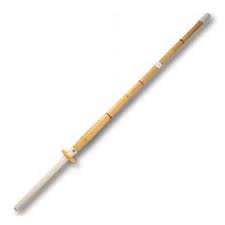 “Well, actually they’re kendos” – Japanese wooden practice swords that some people use instead of real ones for fencing. I added them to my yoga practice with the boys at Norcor after seeing Lynea Gillen do similar activities during her Jedi classes for Yoga Calm.
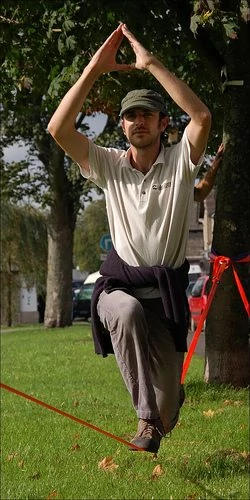
Kendos or bokkens add an edge that keeps the boys interested. I keep mine padded with foam pipe insulation and duct tape so they don’t hurt. When leading a sword-and-balls session, I take the group through a vigorous series of hip-openers and focus exercises. If they are up to the challenge, I add a little sword or koosh ball tossing to keep them engaged. The props sharpen their focus in a way that just telling them to cannot. Many of these boys are quite athletic, and they often quickly master poses like Tree and Eagle.
I draw my inspiration as a Yoga Calm teacher from the Yoga Sutra but also such disparate sources as the 1989 Civil War film Glory, starring Denzel Washington and Matthew Broderick. In one scene, Broderick watches the sharp shooting skills of the new recruits. Consistent with their claims, they are consistently accurate – until he begins firing a Colt navy revolver close to their heads. Suddenly, “focus” takes on a whole new meaning. The recruits’ shots go all over the place. Only with practice can they perform under fire – literally and figuratively.
Our students need practice “under fire,” as well. After some training and experience, most yoga teachers can get their classes into a calm and focused place. What we are working toward, however, is to have our students carry that sense of serenity into places well beyond the mat.
My students at Norcor will not leave this place and head back to happy homes in suburbia. Some may go into a treatment center; most will go back to the chaotic neighborhoods they came from. They need a kinesthetic memory of calm under fire. And if it makes the detention officers look at me askance, that’s a price I’m willing to pay. The boys will leave with one more tool to help them meet the challenges ahead.
 Jeff Albin has been facilitating adventure experiences since he taught his first orienteering class at age 16. A short list of Jeff’s experiences include facility work in drug and alcohol treatment centers, corrections, schools and hospitals. His outdoor experience includes co-leading the first joint kayak expedition to the former Soviet Union, solo kayaking the Inside Passage, and working as a wilderness guide in settings ranging from Class 5 rivers to glaciers. Jeff has over 15 years facilitating both and high low ropes courses. Jeff is also a certified Yoga Calm instructor. He is a certifed Chemical Dependency Counselor in the state of Washington and is currently pursuing his MS in Mental Health. He has been facilitating group games for over 20 years and just recently joined the global efforts of Play for Peace as a certified trainer.